
Memorial Picture Ideas for the Service and for Home
By The Heirloom Portrait. Reviewed by our portrait team. Published September 25, 2026.
The most meaningful memorial picture displays tell a life in a few chapters. Place one clear portrait of the person at the center, surround it with a picture board or two that moves from their early years to the recent ones, and add a small table of photographs and the objects they used every day. After the service, keep one photograph somewhere you will see it each day.

Start with one photograph at the center
Every good memorial display has a place for the eye to rest. Before you sort a single box of prints, choose the one photograph that will stand on its own easel near the entrance or beside the guest book. Everything else can be arranged around it.
It does not need to be the most formal photograph. Choose the one where people will stop and say "that is exactly them": the familiar smile, the way they tilted their head, the look they gave across a dinner table. A relaxed photograph that feels like them is a better centerpiece than a stiff one that does not.
Print it larger than anything on the boards so it reads clearly from across the room. If the photograph you love is small, old, or softly focused, read the section below on preparing photographs before you print.
Memorial picture board ideas
A picture board works best when it has one idea behind it. Choose the approach that suits the photographs you have, or give each board a different one.
- A life in chapters
- Arrange the photographs in order, from childhood to the most recent years. Give each chapter its own column or row so guests can follow the story from across the room.
- The things they loved
- Group photographs by what filled their days instead of by year: the garden, the kitchen, the fishing trips, the grandchildren. One board per passion works well when there are many photographs.
- Then and now
- Pair an early photograph with a recent one taken in a similar place or pose. It is a gentle way to show a whole life at a glance.
- The people around them
- Give a board to the family and friends they gathered over the years: weddings, holidays, reunions, ordinary Sunday dinners. Guests often look for themselves here.
- In their own words
- Add copies of handwriting beside the photographs: a recipe card, a birthday note, a line from a letter. Their handwriting carries as much of them as their face.
- Room for guests
- Leave a space with blank cards and a pen so guests can write a short memory and pin it beside the photographs. The family keeps the cards afterward.
Practical board tips
- Foam board and tri-fold display boards are light and stand easily on an easel or table. Corkboard lets you pin notes and small keepsakes.
- Fewer, larger photographs read better from a few steps away than many small ones.
- Use copies rather than originals, or mount originals with removable photo corners so every print goes home safely.
- Write a short caption for photographs guests may not recognize: a place, a year, the names of the people beside them.
- Ask the venue in advance how many easels and tables are available, and where the boards can stand.
Memory table ideas
A memory table sits beside the boards and holds what a board cannot: framed photographs at different heights, and a few of the objects they reached for every day. Their reading glasses on an open book. Gardening gloves beside a small pot of the flowers they grew. A favorite mug, a well-worn cap, the tools of a trade or a hobby.
Keep it simple. Three to five objects with a photograph or two says more than a crowded table. Add the guest book and the memory cards here so guests pause, look, and write.
Other ways to share their pictures at the service
- A slideshow on a quiet loop. A screen near the reception area can hold far more photographs than any board. Keep each image on screen long enough to recognize, and choose music they loved, played softly or not at all.
- A line of photographs. Twine stretched across a frame or wall, with prints held by small clips, feels informal and invites guests to lean in.
- A digital photo frame. On the memory table, it lets a small space show a whole album.
- Photographs to take home. A basket of duplicate prints lets close friends keep a picture they are in.
How to gather and prepare the photographs
Ask one person to collect photographs from the family, and set a simple deadline. Relatives often hold pictures nobody else has seen, especially from early years. A shared online folder makes it easy for everyone to send phone photographs in their original quality.
Scan older prints flat, in even light, without glare. A straight phone photograph of a print works when a scanner is not available. Avoid screenshots and images saved from social media when the original file exists, since they often lose detail when printed large.
Note who is in each photograph and roughly when it was taken as you go. It helps with captions now, and it becomes part of the family record later.
For more detail on judging faces, expressions, and older photographs, see our guide to choosing photos for a portrait.
If the service is only days away
Most families have very little time between a loss and the service. Plan the display around what can be printed locally in that time, and leave anything that has to be made or shipped for afterward.
If you would like a portrait at the center of the display, a digital portrait file is the option that fits a short timeline. It is delivered by email on the day you order, and you can print it yourself at any size for the easel. A framed print, canvas, or hand-painted oil takes longer to prepare and deliver, so it usually belongs to the weeks after the service, when there is time to choose a place for it at home. A framed print is currently prepared in 3 business days, then 3 to 5 business days in transit. Current timing for every format is on our shipping page.
Every portrait begins with a free preview, so you can see it before you decide anything. There is no deadline on that decision.
Keeping their picture close at home
After the service, the boards come home, and the question becomes where their picture belongs now. There is no right answer, only what feels natural in your home. Many families choose a place they pass every day rather than a room set apart: a hallway, a shelf beside other family photographs, a wall by the kitchen table.
A few ideas for the photographs from the day:
- Return the original prints to the people who lent them, with a copy of the board photographs for each household.
- Gather the board photographs and the guests' memory cards into one album.
- Frame the centerpiece photograph, or have it made into a portrait worth keeping on the wall for good.
A memorial portrait starts from the photograph that feels most like them. It can keep their likeness and expression while giving them a quiet, dignified setting and clothing, even when the source is an ordinary phone picture taken at home.
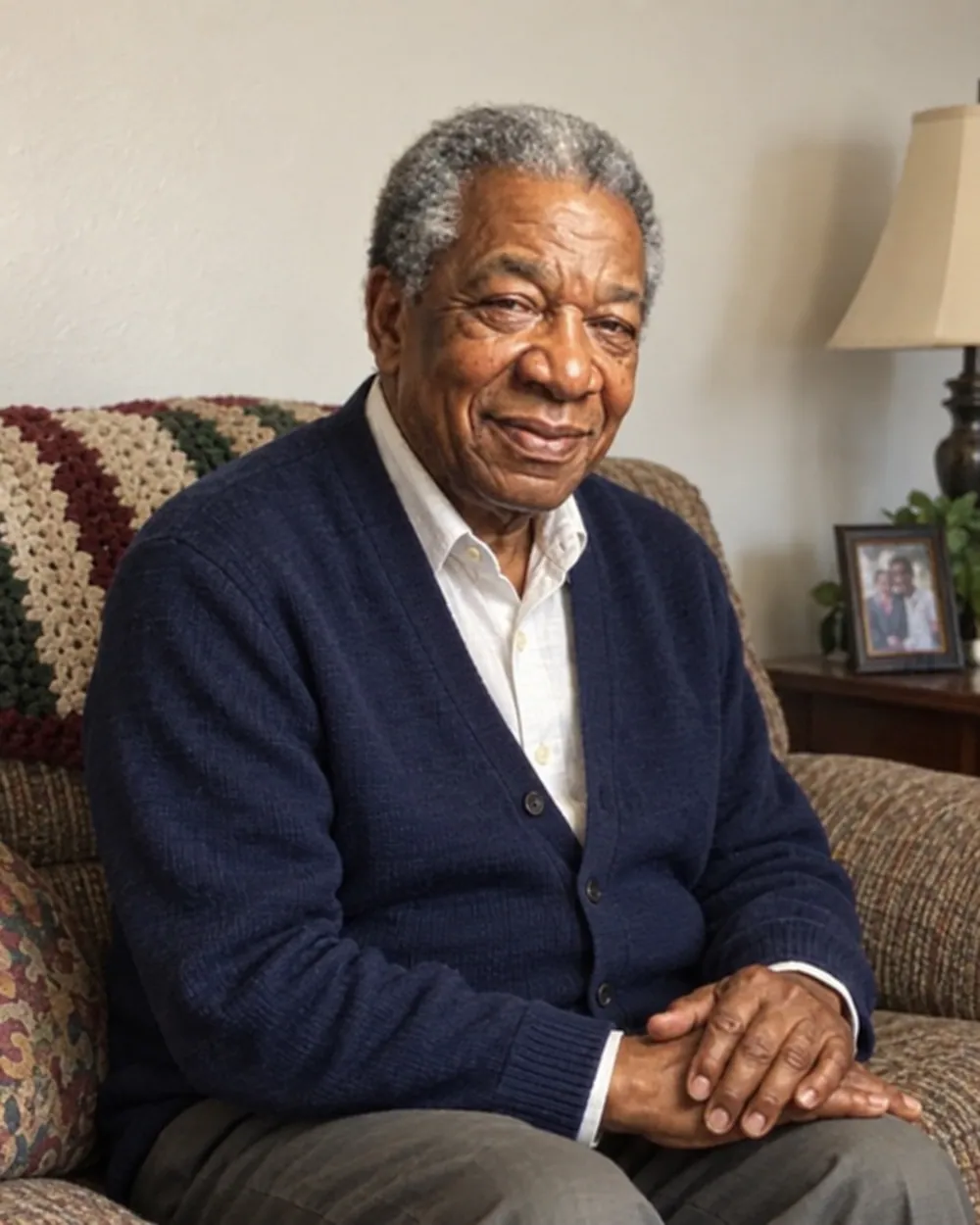
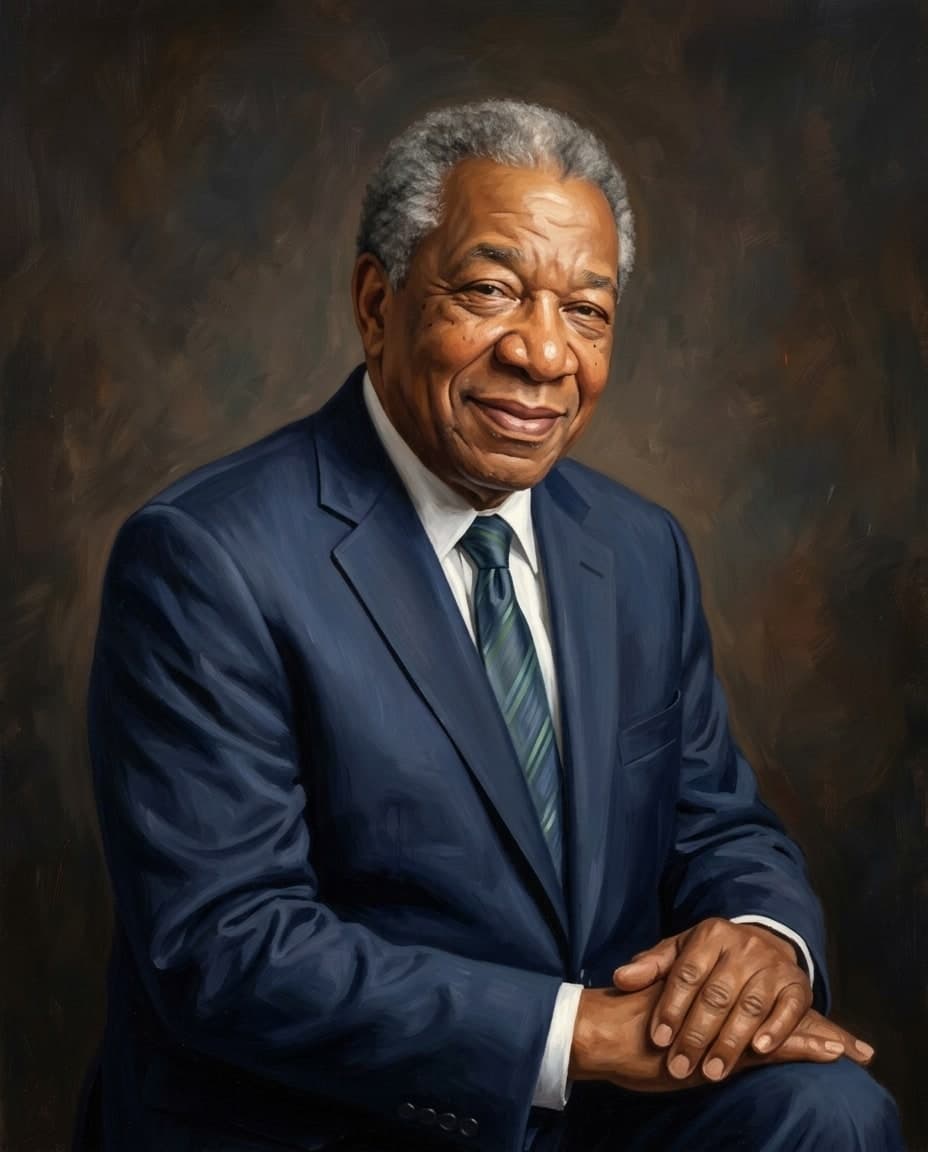
Choose the size by where it will hang and how far away you usually sit. Our portrait print size guide compares the options and allows for a mat and frame. If you would like them to appear alongside the family who are here today, a family portrait can bring separate photographs together into one piece.
Start with the photograph that feels like them
When you are ready, and not before, you can see a free preview of a memorial portrait made from the photograph you choose. Take the time you need.
Explore memorial portraitsRemembering a pet? Our pet memorial guide is written for that. You can also read what makes a portrait an heirloom.