
Portrait print sizes: how to choose the right size
By The Heirloom Portrait. .
An 8 × 10 inch portrait suits a small space. A 16 × 20 gives faces more room, while a 24 × 30 becomes a focal point on a larger wall. Start with where you will see it each day, then measure the space and allow for any mat and frame.
Portrait print sizes describe the artwork. A mat and frame make the finished piece larger.
Compare portrait sizes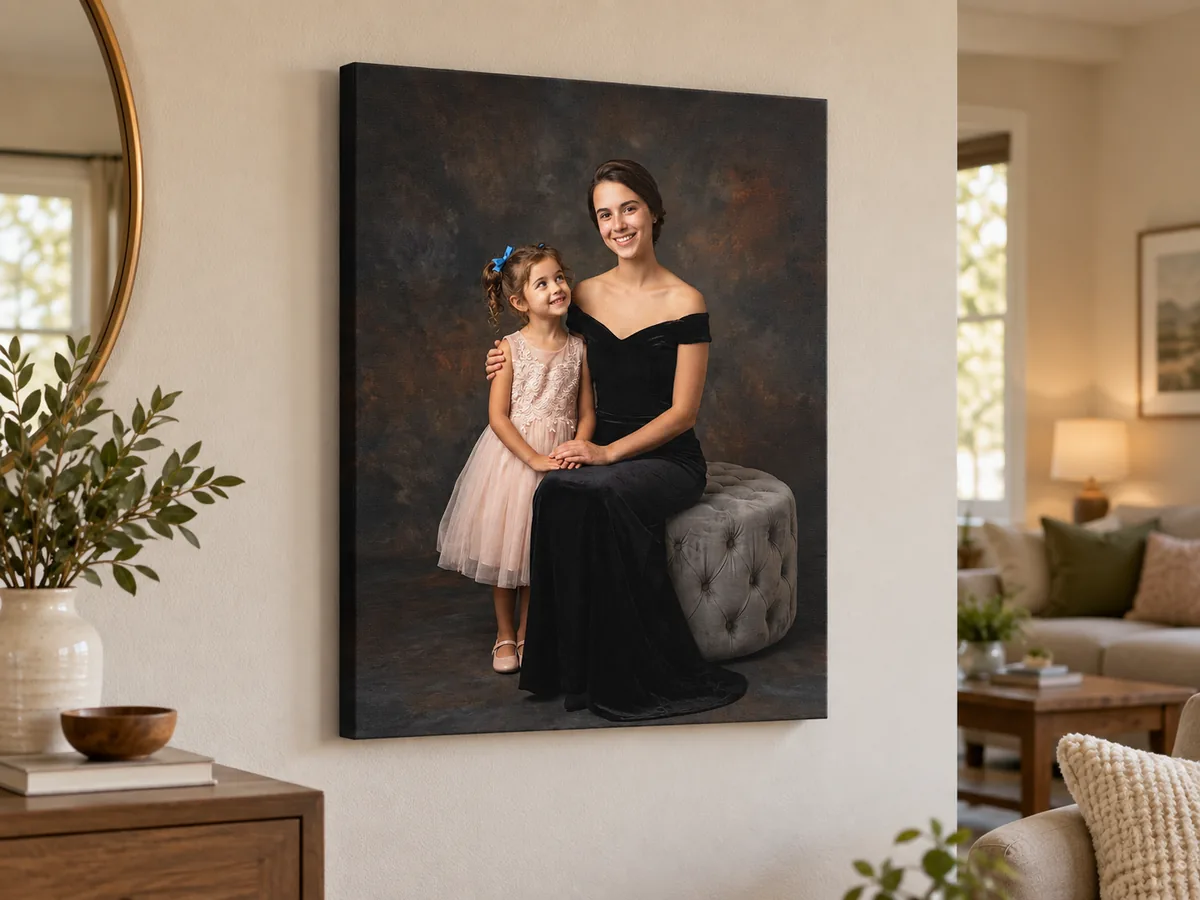
Portrait size chart: compare the artwork
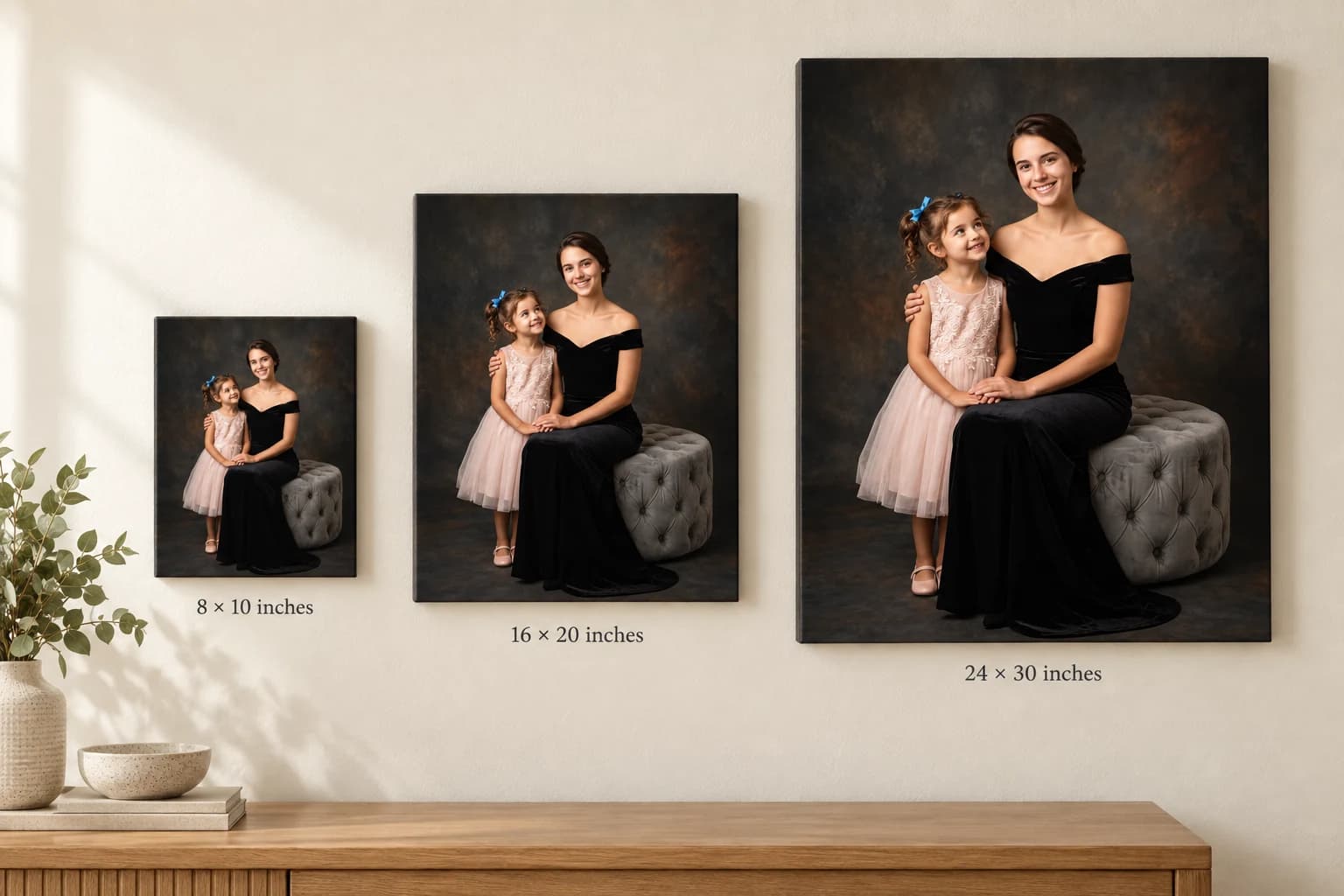
Read each size as width × height in inches. Unlike the illustrative room display, the chart below shows our current artwork sizes at the same scale. It leaves out mats and frames so you can compare the picture itself.
8 × 10inches
16 × 20inches
24 × 30inches
Printed Canvas
1.25 inch deep stretched canvas, ready to hang. No external frame included.
- 8 × 10 inch artwork
- 16 × 20 inch artwork
- 24 × 30 inch artwork
Framed Fine-Art Print
Archival matte paper, a 1.25 inch black frame, white mat, and clear acrylic.
- 8 × 10 inch artwork, with a 1 inch mat on each side
- 16 × 20 inch artwork, with a 2 inch mat on each side
- 24 × 30 inch artwork, with a 2 inch mat on each side
Contact us to confirm outside frame measurements before planning a tight fit.
Hand-Painted Oil Painting
- 16 × 20 inch artwork
- 24 × 30 inch artwork
For current prices and options, see portrait pricing. Your chosen portrait, medium, and size are confirmed before checkout.
What are standard photo print sizes?
Common photo print sizes include 4 × 6, 5 × 7, 8 × 10, and 11 × 14 inches. Larger portrait sizes include 16 × 20 and 24 × 30. The aspect ratio is the relationship between width and height. Prints with the same ratio keep the same shape as they get larger.
These are general printing examples. Use the current collection above to see which sizes we offer.
| Print size | Ratio | A possible place for it |
|---|---|---|
| 4 × 6 | 2:3 | Photo albums and small keepsakes |
| 5 × 7 | 5:7 | Small frames and gift photographs |
| 8 × 10 | 4:5 | A close-viewed portrait or part of a wall grouping |
| 11 × 14 | 11:14 | A medium photograph with a different crop from 8 × 10 |
| 16 × 20 | 4:5 | A portrait with more room for faces and detail |
| 24 × 30 | 4:5 | A larger portrait intended to be seen across a room |
An 8 × 10, 16 × 20, and 24 × 30 all share a vertical 4:5 shape. Moving between those sizes preserves the proportions of the artwork. A 4 × 6 photograph has a taller 2:3 shape. To fit it into 4:5 without stretching anyone, the image needs a crop or extra space around it.
Always review the crop before printing, especially when a face, hand, or pet's ears sit close to an edge. Our family photo selection guide helps you start with a photograph that preserves the details you love.
Which portrait size is right for your room?
A portrait beside your reading chair is seen differently from one above a sofa. Begin with where you will stand or sit, then look at the space around the picture. A small portrait can feel intimate at close range and disappear on a broad wall.
- 8 × 10 inches: consider it for a narrow wall or a grouping of family photographs that you enjoy up close.
- 16 × 20 inches: try this outline above a small console or on a bedroom wall. It gives a couple or family portrait more room without filling a large space.
- 24 × 30 inches: try it when the portrait will be seen from farther away or will be the main picture on the wall. Measure first, especially for a framed piece.
Use these as starting points, then check the size in your own room:
- Measure the open space. Note its width and height, including the furniture, switches, shelves, and nearby pictures that set its boundaries.
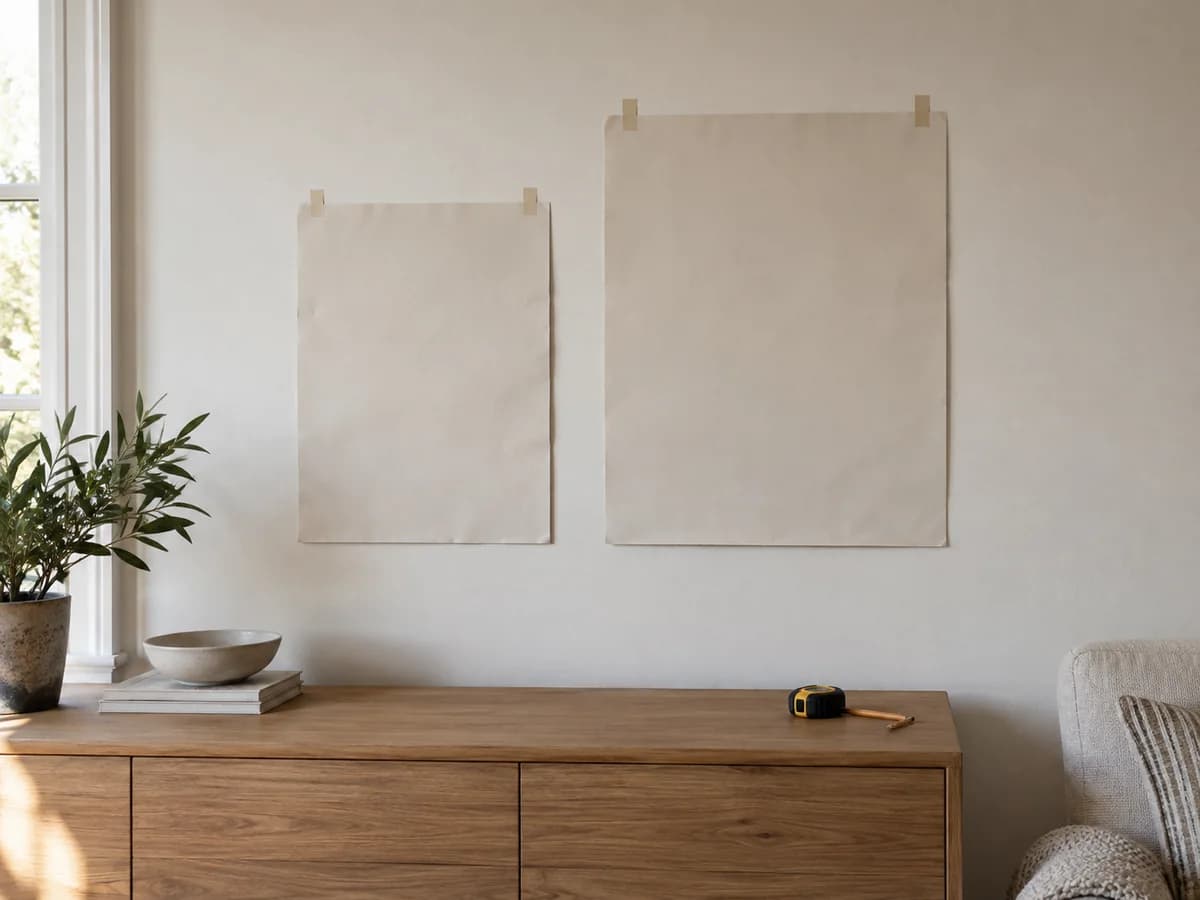
- Try paper outlines. Cut plain paper to two artwork sizes you are considering. Hold them in place, or attach them with a method suitable for your wall finish. Include extra space for a mat and frame.
- Step back to your usual viewpoint. Check the outline from the sofa, doorway, or chair. Look again with the surrounding furniture in view.
- Confirm the finished dimensions. Before ordering for an alcove or a tightly arranged wall, check the outside frame measurements, not just the artwork size.
For a family portrait, look at how much of the picture each face fills. A larger print can make a group easier to see across the room. It cannot restore detail missing from the original photograph.
For a portrait gift for grandparents, a smaller piece may be easier to place among existing photographs. If you are planning a larger gift, ask about the wall first. Our Christmas portrait ideas can help you choose who and what the gift should celebrate.
Does the portrait size include the frame?
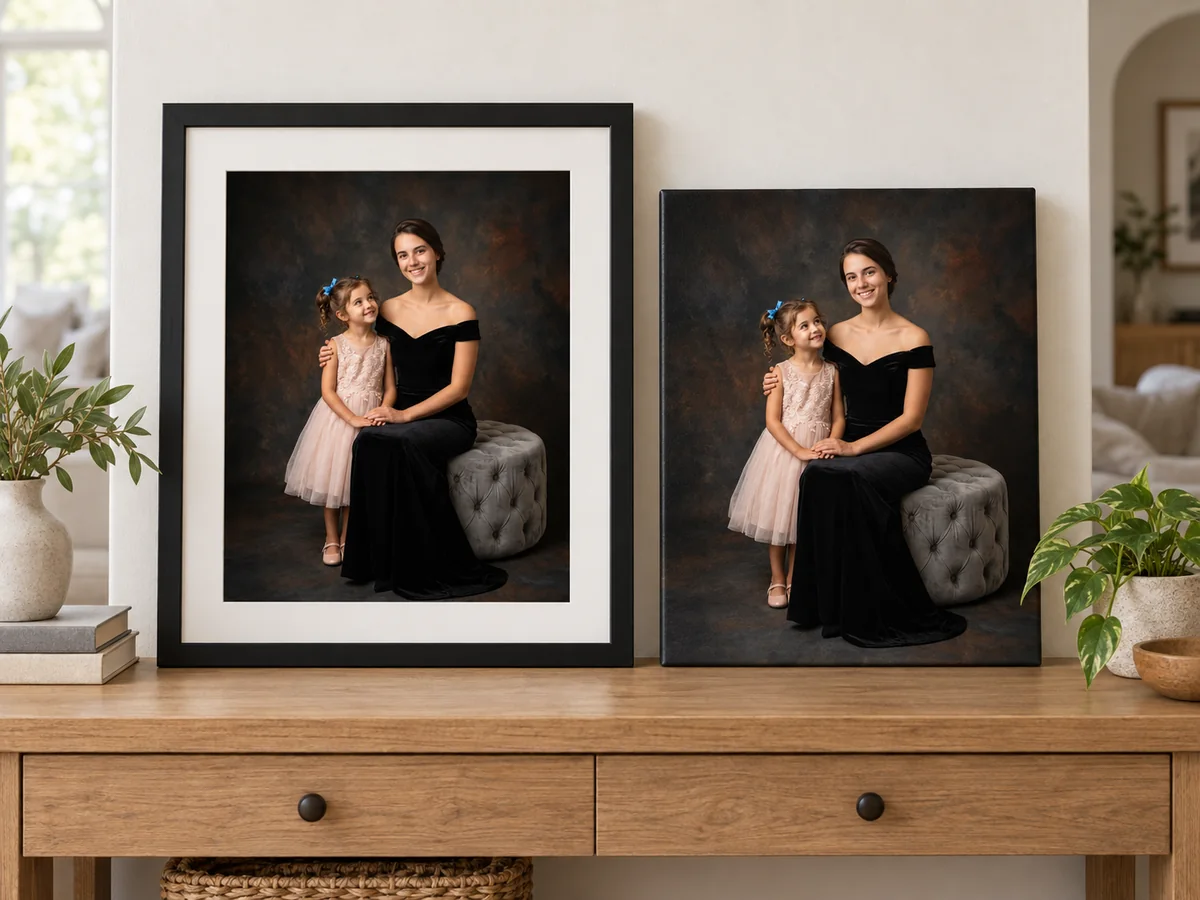
No. Our listed portrait sizes measure the artwork itself. The mat is the border around it. The outside frame size measures the whole finished piece from edge to edge.
For example, allowing 1 inch of mat on every side of an 8 × 10 artwork adds 2 inches to both its width and height. That gives 10 × 12 inches before accounting for the frame. Use this to understand the extra space a mat takes, not to predict the finished frame dimensions. The opening, overlap, and frame construction also matter.
Use artwork measurements to compare the pictures. Use confirmed outside measurements to plan wall spacing or check whether a finished piece fits. When matching an existing frame, check its stated artwork or mat-opening size as well as the shape of your portrait.
Canvas or fine-art paper?
Choose fine-art paper if you like a smooth picture surface set within a mat and frame. Choose canvas if you prefer a visible weave and a picture that stands out from the wall.
Our printed canvas has a subtle semi-gloss finish. Our archival matte paper has a smooth, acid-free surface. The finish and framing details for each option are listed above.
A mat and frame give paper portraits a wider border on the wall. With stretched canvas, the picture reaches its edges. Compare the artwork size first, then consider the space its finished presentation will need. A canvas print is printed artwork; the oil option is painted by hand.
Keep canvas away from direct sunlight and damp areas, and dust it gently with a soft dry cloth. The room and care matter alongside the material.
How large can you print a digital portrait?
Check the pixel dimensions of the finished file, then ask your printer what size suits the image and material. The crop and viewing distance matter too. A high-resolution file still has limits.
For an estimate, divide the pixels along each edge by the intended pixels per inch (PPI). A 3200 × 4000 pixel file works out to about 10.7 × 13.3 inches at 300 PPI, or 16 × 20 inches at 200 PPI. This is an example calculation; check your own file before choosing a print size.
Ask your printer to assess the actual file at your chosen size. Check both dimensions and the crop before paying for a separate print. When ordering a physical portrait from us, choose from the offered sizes after reviewing your free preview.
Start with the people. Choose the size next.
See your portrait before deciding how to keep it. Then return to your wall measurements and choose the medium and size that feel at home.
See current pricing or read what makes a portrait an heirloom.